
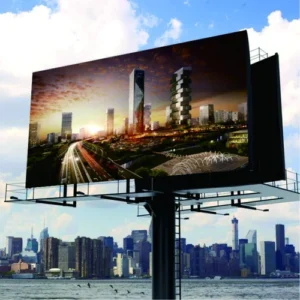
Outdoor LED vs Indoor LED Display: Complete Buyer’s Guide for Indian Businesses (2025)


LED Buying Guide

Outdoor LED vs Indoor LED Display: Complete Buyer’s Guide for Indian Businesses (2025)

📅 Updated: May 2025⏱ 10 min read✍ Rokon Solutions Editorial Team📍 Serving Mumbai · Delhi · Bangalore · Hyderabad · Pune

Choosing the wrong LED display type can cost you lakhs. Whether you’re a mall owner in Mumbai, a corporate in Bangalore, or a hotel in Hyderabad — this guide breaks down every spec, price factor, and city-specific consideration you need before signing a purchase order.

What Are Outdoor and Indoor LED Displays?

At the most basic level, both are arrays of LED (Light Emitting Diode) modules assembled into panels that display video, images, or text. But the resemblance ends there. An outdoor LED display is engineered to survive monsoons, direct sunlight at 45°C, and birds — while still delivering punchy, visible visuals from 20–300 metres away. An indoor LED display is built for controlled environments: finer pixel resolution, lower brightness, and optimised colour performance for close-up viewing from 2–10 metres.

India’s LED display market is booming. The outdoor LED segment alone was valued at USD 294 million in 2024 and is projected to reach USD 525 million by 2033, driven by the Smart Cities Mission, DOOH advertising growth, and rapid commercial expansion across Tier 1 and Tier 2 cities. If you’re a business owner or procurement manager, understanding the difference isn’t optional — it’s financial due diligence.

Key Insight: Buying an indoor LED panel for an outdoor location is one of the most common (and costly) mistakes in India’s LED market. The panel will fail within months due to moisture ingress, sun glare, and heat buildup. Always match the display type to the environment.

Full Specification Comparison Table

Here is a side-by-side breakdown of every key parameter that differentiates outdoor and indoor LED displays:

Parameter Outdoor LED Indoor LED Why It Matters
Pixel Pitch P6 – P20 (typically P8, P10) P1.5 – P4 (typically P2, P3) Determines resolution & min. viewing distance
Brightness 5,000 – 10,000+ nits 800 – 2,000 nits Visibility in sunlight vs. dim interiors
IP Rating IP65 – IP68 IP30 – IP54 Dust and water protection level
Viewing Distance 15 m – 300 m 2 m – 15 m Optimal distance for clear imagery
Refresh Rate 1,920 – 3,840 Hz 3,840 – 7,680 Hz Higher = smoother video, less flicker
Cabinet Material Die-cast aluminium, steel Aluminium / plastic composite Structural durability and heat dissipation
Operating Temp. -20°C to +60°C 0°C to +40°C India summers can hit 45°C+ outdoors
Power Consumption 400 – 700 W/m² 200 – 400 W/m² Affects monthly electricity bill
Typical Lifespan 80,000 – 100,000 hrs 60,000 – 80,000 hrs ROI calculation anchor
Installation Wall mount, pole, rooftop Floor stand, wall, ceiling Structural load + civil work required
Content Mgmt. Remote / cloud-based Remote / cloud-based Both support smart scheduling
Price Range (per m²) ₹40,000 – ₹1,20,000 ₹25,000 – ₹80,000 Varies by pixel pitch and brand

Pixel Pitch Explained Simply

Pixel pitch is the distance in millimetres between the centre of one LED pixel and the centre of the next. A smaller pixel pitch = higher pixel density = sharper image — but also a higher price. Here’s a practical mental model: pixel pitch roughly equals the minimum comfortable viewing distance in metres, multiplied by 1,000.

P2 – P3 Indoor
2–3 m
Boardrooms, reception desks, retail kiosks, control rooms
P4 – P5 Semi-outdoor
4–5 m
Lobby displays, covered walkways, metro station concourses
P6 – P8 Outdoor
6–8 m
Building facades, petrol station signs, mall exteriors
P10 – P16 Outdoor
10–16 m
Highway billboards, stadium perimeters, large hoardings

For most businesses in Mumbai and Delhi buying their first outdoor display, a P8 or P10 panel at a reasonable price point delivers excellent ROI — sharp enough for pedestrian zones and wide-road views alike. For indoor video walls in Bangalore IT parks or Hyderabad hotel lobbies, a P2 or P3 panel is the professional standard.

Rokon Tip: Don’t over-specify. Buying a P2 panel for a highway hoarding is like printing a 4K video to play on a standard TV from 50 feet away — you pay a premium for resolution your viewers physically cannot perceive.

Brightness and Nits: What Does Your Environment Actually Need?

Brightness is measured in nits (cd/m²). The higher the nit value, the more visible the display is in ambient light conditions. Getting this wrong outdoors in India is catastrophic — a low-brightness panel washes out entirely under direct afternoon sun in Hyderabad or Pune and becomes an expensive blank rectangle.

Direct Sunlight (Outdoor)
6,000–10,000 nits
Highway billboards, open building facades, stadium screens
Shaded Outdoor
4,000–6,000 nits
Under canopies, covered bus stops, sheltered exteriors
Brightly Lit Interior
1,500–2,500 nits
Retail stores, showrooms with strong ambient lighting
Dim Interior
800–1,200 nits
Conference rooms, dark theatres, AV control rooms

India’s summer heat also plays a role. High-brightness panels generate significant heat. Quality outdoor displays from reliable suppliers include automatic brightness sensors that dim the screen at night (reducing electricity costs) and thermal management systems that keep the LEDs within safe operating temperatures even at 45°C ambient temperature — a critical requirement for Delhi summers.

IP Ratings and the Indian Weather Challenge

The Ingress Protection (IP) rating tells you exactly how sealed a display is against solids (first digit) and liquids (second digit). For any business in coastal Mumbai, monsoon-heavy Pune, or dust-prone Delhi NCR, the IP rating is non-negotiable.

IP Rating Dust Protection Water Protection Suitable For
IP30 Tools only None Indoor only, dry rooms
IP54 Dust-limited Splash-proof Indoor / semi-outdoor canopies
IP65 Fully dust-tight Water jets Standard outdoor — minimum for India
IP66 Fully dust-tight Powerful jets Exposed outdoor, coastal locations
IP67 Fully dust-tight Immersion up to 1 m Mumbai seafront, flood-prone zones
IP68 Fully dust-tight Immersion beyond 1 m Extreme environments
Mumbai and Pune buyers take note: During the monsoon season (June–September), rainfall regularly exceeds 200 mm in a single day in coastal Maharashtra. Any outdoor display installed here should be rated at minimum IP65, and IP66 or IP67 is strongly recommended for open locations with no overhead cover.

For Delhi NCR’s dry, dust-laden winters and sandstorm-prone conditions, the first digit of the IP rating (dust protection) is equally critical. An IP65 or higher rating ensures dust particles don’t infiltrate the cabinet and damage the driver boards or power supply — which are the most expensive components to replace.

Pricing Benchmarks for Indian Businesses (2025)

Prices in India’s LED display market vary significantly based on pixel pitch, brand origin (Chinese OEM vs. Indian-assembled), installation complexity, and ongoing maintenance contracts. Below are realistic 2025 benchmarks for a quality installation with after-sales support — not bargain-basement imports with no warranty coverage.

Outdoor P8–P10
₹40,000–₹65,000
per sq metre (supply)
Outdoor P6 Premium
₹70,000–₹1,20,000
per sq metre (supply)
Indoor P3–P4
₹35,000–₹60,000
per sq metre (supply)
Indoor P2 Fine Pitch
₹65,000–₹1,00,000
per sq metre (supply)
Installation (civil)
₹15,000–₹40,000
per sq metre (typical)
AMC (annual)
8–12%
of supply cost per year
What affects price the most: Pixel pitch (finer = costlier), cabinet grade (aluminium vs. steel), control system brand (Novastar, Linsn, etc.), installation location complexity (ground floor vs. rooftop high-rise), and whether you include content management software and a warranty-backed AMC. Always ask for a total cost of ownership (TCO) quote — not just supply cost.

Pros and Cons at a Glance

✔ Outdoor LED — Advantages

  • + 24/7 brand visibility in high-traffic zones
  • + Dynamic content — change messaging remotely
  • + Revenue from third-party advertisers
  • + Long lifespan (80,000–100,000 hrs)
  • + Energy-efficient vs. traditional hoardings

✖ Outdoor LED — Considerations

  • Higher initial investment
  • Requires structural civil work
  • Municipal permissions needed in most cities
  • Higher power consumption
  • Periodic cleaning in dusty / coastal zones

✔ Indoor LED — Advantages

  • + Ultra-sharp visuals at close range
  • + Controlled environment = lower maintenance
  • + Lower power consumption
  • + Elevates brand perception significantly
  • + No permits or civil structure required

✖ Indoor LED — Considerations

  • Visible only to indoor audience
  • Fine-pitch panels (P2) can be costly
  • Requires stable power supply (UPS advised)
  • Sensitive to humidity in unventilated rooms

City-by-City Use Case Guide

India’s metros have distinct commercial ecosystems. Here’s what businesses in each major city are actually buying and why:

🏙
Mumbai
Outdoor + Indoor

High-density retail corridors (Linking Road, Andheri MIDC) drive strong demand for outdoor P8–P10 displays. Coastal humidity makes IP66 ratings essential. Corporate towers in BKC and Nariman Point use fine-pitch indoor walls (P2–P3) for lobbies and boardrooms. Rokon Solutions is based in Navi Mumbai — service response within hours for the MMR.

🏛
Delhi NCR
Outdoor Dominant

India’s largest outdoor LED market. Highway corridors (NH-48, Noida Expressway), metro station exteriors, and mall rooftops are premium locations. Dust protection (IP65 minimum) is critical. P10 panels at 8,000+ nits are the standard for high-visibility highway installations. Government and PSU buyers also show strong demand for indoor control-room video walls.

💻
Bangalore
Indoor Dominant

India’s tech capital drives the highest per-square-foot spend on indoor video walls. IT parks in Whitefield, Electronic City, and Manyata Tech Park favour P2–P2.5 fine-pitch panels for auditoriums, command centres, and reception lobbies. Conference room displays (P1.5–P2) are a fast-growing segment. Moderate climate means IP ratings are less critical than other cities.

🏨
Hyderabad
Outdoor + Hospitality

HITEC City and Gachibowli’s commercial growth is fueling outdoor LED demand on major arterials. Simultaneously, the city’s booming hospitality and convention sector (HICC, hotels near Financial District) creates strong demand for premium indoor LED walls. P8 outdoor and P3 indoor are the sweet spots for Hyderabad buyers at most budget ranges.

🏭
Pune
Outdoor + Auto Sector

Pune’s auto and manufacturing corridors (Chakan, Pimpri-Chinchwad) drive industrial-grade display demand. Monsoon intensity here rivals coastal areas — IP65 is mandatory, IP66 preferred. The growing retail presence in Hinjewadi and Baner creates demand for indoor retail signage. Educational institutions in the city are also increasingly adopting indoor LED walls for auditoriums.

Which LED Display Is Right for Your Business?

Answer these two questions: Where will it be installed? And how close will your audience typically stand? Use this guide to match your situation:

Choose Outdoor LED if…

  • Your display is on a building exterior, rooftop, compound wall, or highway
  • Your target audience is passing traffic — pedestrians or vehicles
  • Viewing distance is 10 metres or more
  • You need 24/7 all-weather operation
  • You want to generate advertising revenue from third parties
  • You’re in Mumbai, Pune or a coastal/high-rainfall city

Choose Indoor LED if…

  • Your display is inside a mall, office, hotel lobby, or auditorium
  • Viewers will typically stand within 2–10 metres of the screen
  • Image quality and colour accuracy are top priorities
  • You’re building a branded reception, boardroom, or control centre
  • Your environment has controlled temperature and humidity
  • You’re in a Bangalore IT park or Hyderabad hotel
Semi-outdoor is a third option: Covered walkways, metro concourses, petrol stations under canopies, and airport drop-off zones need a display that handles ambient light and occasional moisture — but not full weather exposure. Semi-outdoor displays (IP54, 3,000–4,000 nits, P4–P5) are a cost-effective middle ground. Ask Rokon Solutions about semi-outdoor configurations if your installation falls in this category.

Frequently Asked Questions

Can I use an indoor LED display in a semi-covered outdoor area?
Only if the area is completely shielded from rain splash, direct sunlight, and dust ingress. Even then, we recommend a semi-outdoor rated display (IP54 minimum) rather than a standard indoor panel. A single monsoon season will typically cause irreversible damage to an indoor LED display exposed to outdoor conditions — voiding most warranties.
What pixel pitch should I choose for my shop front in Mumbai?
For a street-facing shopfront in a busy Mumbai commercial area (Bandra, Andheri, Lower Parel), where pedestrians walk within 5–8 metres of the display, a P6 outdoor panel strikes the ideal balance of resolution and price. If your shopfront is a large format sign viewed from 15+ metres (such as a main road), a P8 or P10 is more cost-effective without sacrificing visibility.
How much does a 10×5 ft outdoor LED display cost in India in 2025?
A 10×5 ft (approx. 4.6 m²) outdoor display at P8–P10 specification will typically cost between ₹1.8 lakh and ₹3.5 lakh for supply, plus ₹50,000–₹1.5 lakh for installation depending on structural requirements. Total installed cost for a quality, warranted display: ₹2.5 lakh–₹5 lakh. Beware of quotations significantly below this range — they usually indicate sub-standard components without proper IP ratings or after-sales support.
Do I need municipal permission to install an outdoor LED display in Delhi or Mumbai?
Yes. In Mumbai, outdoor hoardings and LED displays require permission from the BMC (Brihanmumbai Municipal Corporation) and, for some locations, the Maharashtra State Road Development Corporation. In Delhi, permissions fall under the MCD (Municipal Corporation of Delhi) or NDMC depending on the zone. Rokon Solutions assists clients with documentation and compliance as part of our pan-India project service.
How long does an outdoor LED display last in Indian conditions?
A quality outdoor LED display with proper IP rating and regular cleaning will last 8–12 years in Indian conditions. LED chips themselves are rated for 80,000–100,000 hours. The components that typically fail first are driver ICs and power supplies — which is why a good Annual Maintenance Contract (AMC) covering parts and labour is essential.
What is the difference between active LED and passive LED displays?
Active LED (also called active matrix LED) uses individual transistors at each pixel to control the signal, resulting in sharper images, better uniformity, and faster refresh rates. Passive LED drives entire rows and columns together, making it simpler but lower in resolution and refresh performance. For professional indoor video walls in Bangalore or Hyderabad corporate spaces, active LED is the industry standard. Passive LED is typically found in older ticker displays and simple single-colour scoreboards.

Not Sure Which Display Is Right for You?

Rokon Solutions has 7+ years of Pixel LED expertise across pan-India. Get a free site assessment and customised quotation — we’ll tell you exactly what specification fits your location, budget, and business goal.

Get a Free Quote →
outdoor LED display India indoor LED video wall LED display Mumbai LED screen Delhi LED display Bangalore LED signage Hyderabad LED display Pune pixel pitch guide LED display price India 2025 IP rating LED screen active LED display Rokon Solutions

Leave a Comment

Your email address will not be published. Required fields are marked *

Scroll to Top

E-Waste Management.

 Introduction

I would like to bring to your attention the growing concern of electronic waste (e-waste) in our industry. As you may know, e-waste refers to discarded electronic products that have reached the end of their useful life. It includes items such as mobile phones, laptops, and other electronic devices. It is essential to properly handle and dispose of these devices, as improper disposal can lead to severe environmental and health consequences. E-waste contains valuable materials like aluminum, copper, and precious metals, but it also encompasses hazardous substances like cadmium, lead, and mercury. If not disposed of correctly, it can result in toxic emissions and contamination of our air, water, and soil. To mitigate the risks associated with e-waste, it would be beneficial to consider the implementation of a device recycling and refurbishment program in the workplace. This could involve exploring local recycling facilities, holding electronics collection drives, or partnering with organizations that specialize in electronic waste management.


At Rokon Solutions Private Limited, we are committed to responsible e-waste management and contributing to a more sustainable future. We recognize the importance of recycling valuable materials from discarded electronic products to conserve our planet’s dwindling natural resources. As part of our ongoing efforts to reduce waste and minimize landfill impact, we have partnered with a leading authorized recycler, Bombay Recycle Private Limited. Our collaboration enables customers to efficiently and safely dispose of their e-waste in an environmentally friendly manner. This partnership reinforces our dedication to environmentally responsible business practices and supports our commitment to a greener tomorrow.

Bombay Recycle Private Limited, one of the renowned recyclers, is a pioneer of recycling e-waste in the most organized manner in India. Authorized by CPCB and UPPCB and are committed towards environmental, social & corporate governance. They have expertise in assisting producers in fulfilling their compliances related to EPR and e-waste management.

Benefit Of Recycling Of E-Waste

  • E-waste contains many valuable, recoverable materials such as aluminum, copper, gold, silver, plastics, and ferrous metals. In order to conserve natural resources and the energy needed to produce new electronic equipment from virgin resources, electronic equipment can be refurbished, reused, and recycled instead of being landfilled.

  • E-waste also contains toxic and hazardous materials, including mercury, lead, cadmium, beryllium, chromium, and chemical flame retardants, which have the potential to leach into our soil and water.

  • Protects your surroundings—Safe recycling of outdated electronics promotes sound management of toxic chemicals such as lead and mercury.

  • Conserves natural resources—Recycling recovers valuable materials from old electronics that can be used to make new products. As a result, we save energy, reduce pollution, reduce greenhouse gas emissions, and save resources by extracting fewer raw materials from the earth.

  • Helps others – Donating your used electronics benefits your community by passing on ready-to-use or refurbished equipment to those who need it.

  • Saves landfill space—E-waste is a growing waste stream. By recycling these items, landfill space is conserved.

Dos & Don’ts


Do’s:

  • Always look for information on the catalogue with your product for end-of-life equipment handling.

  • Ensure that only authorized recyclers repair and handle your electronic products.

  • Always call our E-waste Authorized Collection Centers/points to dispose of products that have reached end-of-life.

  • Always drop your used electronic products, batteries, or any accessories when they reach the end of their life at your nearest Authorized E-Waste Collection Centers/Points.

  • Always disconnect the battery from the product, and ensure any glass surface is protected against breakage.

Don’ts:


  • Do not dismantle your electronic products on your own.

  • Do not throw electronics in bins having a “Do not Dispose” sign.

  • Do not give e-waste to informal (Kabbadi) and unorganized sectors like local scrap dealers/rag pickers.

  • Do not dispose of your product in garbage bins along with municipal waste that ultimately reaches landfills.