
Outdoor LED vs Indoor LED Display: Complete Buyer’s Guide for Indian Businesses (2025)
Choosing the wrong LED display type can cost you lakhs. Whether you’re a mall owner in Mumbai, a corporate in Bangalore, or a hotel in Hyderabad — this guide breaks down every spec, price factor, and city-specific consideration you need before signing a purchase order.
What Are Outdoor and Indoor LED Displays?
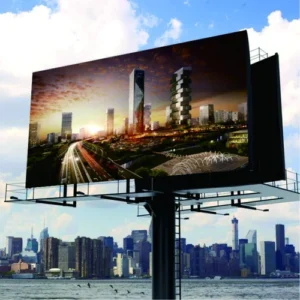
At the most basic level, both are arrays of LED (Light Emitting Diode) modules assembled into panels that display video, images, or text. But the resemblance ends there. An outdoor LED display is engineered to survive monsoons, direct sunlight at 45°C, and birds — while still delivering punchy, visible visuals from 20–300 metres away. An indoor LED display is built for controlled environments: finer pixel resolution, lower brightness, and optimised colour performance for close-up viewing from 2–10 metres.
India’s LED display market is booming. The outdoor LED segment alone was valued at USD 294 million in 2024 and is projected to reach USD 525 million by 2033, driven by the Smart Cities Mission, DOOH advertising growth, and rapid commercial expansion across Tier 1 and Tier 2 cities. If you’re a business owner or procurement manager, understanding the difference isn’t optional — it’s financial due diligence.
Full Specification Comparison Table
Here is a side-by-side breakdown of every key parameter that differentiates outdoor and indoor LED displays:
| Parameter | Outdoor LED | Indoor LED | Why It Matters |
|---|---|---|---|
| Pixel Pitch | P6 – P20 (typically P8, P10) | P1.5 – P4 (typically P2, P3) | Determines resolution & min. viewing distance |
| Brightness | 5,000 – 10,000+ nits | 800 – 2,000 nits | Visibility in sunlight vs. dim interiors |
| IP Rating | IP65 – IP68 | IP30 – IP54 | Dust and water protection level |
| Viewing Distance | 15 m – 300 m | 2 m – 15 m | Optimal distance for clear imagery |
| Refresh Rate | 1,920 – 3,840 Hz | 3,840 – 7,680 Hz | Higher = smoother video, less flicker |
| Cabinet Material | Die-cast aluminium, steel | Aluminium / plastic composite | Structural durability and heat dissipation |
| Operating Temp. | -20°C to +60°C | 0°C to +40°C | India summers can hit 45°C+ outdoors |
| Power Consumption | 400 – 700 W/m² | 200 – 400 W/m² | Affects monthly electricity bill |
| Typical Lifespan | 80,000 – 100,000 hrs | 60,000 – 80,000 hrs | ROI calculation anchor |
| Installation | Wall mount, pole, rooftop | Floor stand, wall, ceiling | Structural load + civil work required |
| Content Mgmt. | Remote / cloud-based | Remote / cloud-based | Both support smart scheduling |
| Price Range (per m²) | ₹40,000 – ₹1,20,000 | ₹25,000 – ₹80,000 | Varies by pixel pitch and brand |
Pixel Pitch Explained Simply
Pixel pitch is the distance in millimetres between the centre of one LED pixel and the centre of the next. A smaller pixel pitch = higher pixel density = sharper image — but also a higher price. Here’s a practical mental model: pixel pitch roughly equals the minimum comfortable viewing distance in metres, multiplied by 1,000.
For most businesses in Mumbai and Delhi buying their first outdoor display, a P8 or P10 panel at a reasonable price point delivers excellent ROI — sharp enough for pedestrian zones and wide-road views alike. For indoor video walls in Bangalore IT parks or Hyderabad hotel lobbies, a P2 or P3 panel is the professional standard.
Brightness and Nits: What Does Your Environment Actually Need?
Brightness is measured in nits (cd/m²). The higher the nit value, the more visible the display is in ambient light conditions. Getting this wrong outdoors in India is catastrophic — a low-brightness panel washes out entirely under direct afternoon sun in Hyderabad or Pune and becomes an expensive blank rectangle.
India’s summer heat also plays a role. High-brightness panels generate significant heat. Quality outdoor displays from reliable suppliers include automatic brightness sensors that dim the screen at night (reducing electricity costs) and thermal management systems that keep the LEDs within safe operating temperatures even at 45°C ambient temperature — a critical requirement for Delhi summers.
IP Ratings and the Indian Weather Challenge
The Ingress Protection (IP) rating tells you exactly how sealed a display is against solids (first digit) and liquids (second digit). For any business in coastal Mumbai, monsoon-heavy Pune, or dust-prone Delhi NCR, the IP rating is non-negotiable.
| IP Rating | Dust Protection | Water Protection | Suitable For |
|---|---|---|---|
| IP30 | Tools only | None | Indoor only, dry rooms |
| IP54 | Dust-limited | Splash-proof | Indoor / semi-outdoor canopies |
| IP65 | Fully dust-tight | Water jets | Standard outdoor — minimum for India |
| IP66 | Fully dust-tight | Powerful jets | Exposed outdoor, coastal locations |
| IP67 | Fully dust-tight | Immersion up to 1 m | Mumbai seafront, flood-prone zones |
| IP68 | Fully dust-tight | Immersion beyond 1 m | Extreme environments |
For Delhi NCR’s dry, dust-laden winters and sandstorm-prone conditions, the first digit of the IP rating (dust protection) is equally critical. An IP65 or higher rating ensures dust particles don’t infiltrate the cabinet and damage the driver boards or power supply — which are the most expensive components to replace.
Pricing Benchmarks for Indian Businesses (2025)
Prices in India’s LED display market vary significantly based on pixel pitch, brand origin (Chinese OEM vs. Indian-assembled), installation complexity, and ongoing maintenance contracts. Below are realistic 2025 benchmarks for a quality installation with after-sales support — not bargain-basement imports with no warranty coverage.
Pros and Cons at a Glance
✔ Outdoor LED — Advantages
- + 24/7 brand visibility in high-traffic zones
- + Dynamic content — change messaging remotely
- + Revenue from third-party advertisers
- + Long lifespan (80,000–100,000 hrs)
- + Energy-efficient vs. traditional hoardings
✖ Outdoor LED — Considerations
- – Higher initial investment
- – Requires structural civil work
- – Municipal permissions needed in most cities
- – Higher power consumption
- – Periodic cleaning in dusty / coastal zones
✔ Indoor LED — Advantages
- + Ultra-sharp visuals at close range
- + Controlled environment = lower maintenance
- + Lower power consumption
- + Elevates brand perception significantly
- + No permits or civil structure required
✖ Indoor LED — Considerations
- – Visible only to indoor audience
- – Fine-pitch panels (P2) can be costly
- – Requires stable power supply (UPS advised)
- – Sensitive to humidity in unventilated rooms
City-by-City Use Case Guide
India’s metros have distinct commercial ecosystems. Here’s what businesses in each major city are actually buying and why:
High-density retail corridors (Linking Road, Andheri MIDC) drive strong demand for outdoor P8–P10 displays. Coastal humidity makes IP66 ratings essential. Corporate towers in BKC and Nariman Point use fine-pitch indoor walls (P2–P3) for lobbies and boardrooms. Rokon Solutions is based in Navi Mumbai — service response within hours for the MMR.
India’s largest outdoor LED market. Highway corridors (NH-48, Noida Expressway), metro station exteriors, and mall rooftops are premium locations. Dust protection (IP65 minimum) is critical. P10 panels at 8,000+ nits are the standard for high-visibility highway installations. Government and PSU buyers also show strong demand for indoor control-room video walls.
India’s tech capital drives the highest per-square-foot spend on indoor video walls. IT parks in Whitefield, Electronic City, and Manyata Tech Park favour P2–P2.5 fine-pitch panels for auditoriums, command centres, and reception lobbies. Conference room displays (P1.5–P2) are a fast-growing segment. Moderate climate means IP ratings are less critical than other cities.
HITEC City and Gachibowli’s commercial growth is fueling outdoor LED demand on major arterials. Simultaneously, the city’s booming hospitality and convention sector (HICC, hotels near Financial District) creates strong demand for premium indoor LED walls. P8 outdoor and P3 indoor are the sweet spots for Hyderabad buyers at most budget ranges.
Pune’s auto and manufacturing corridors (Chakan, Pimpri-Chinchwad) drive industrial-grade display demand. Monsoon intensity here rivals coastal areas — IP65 is mandatory, IP66 preferred. The growing retail presence in Hinjewadi and Baner creates demand for indoor retail signage. Educational institutions in the city are also increasingly adopting indoor LED walls for auditoriums.
Which LED Display Is Right for Your Business?
Answer these two questions: Where will it be installed? And how close will your audience typically stand? Use this guide to match your situation:
Choose Outdoor LED if…
- ✓ Your display is on a building exterior, rooftop, compound wall, or highway
- ✓ Your target audience is passing traffic — pedestrians or vehicles
- ✓ Viewing distance is 10 metres or more
- ✓ You need 24/7 all-weather operation
- ✓ You want to generate advertising revenue from third parties
- ✓ You’re in Mumbai, Pune or a coastal/high-rainfall city
Choose Indoor LED if…
- ✓ Your display is inside a mall, office, hotel lobby, or auditorium
- ✓ Viewers will typically stand within 2–10 metres of the screen
- ✓ Image quality and colour accuracy are top priorities
- ✓ You’re building a branded reception, boardroom, or control centre
- ✓ Your environment has controlled temperature and humidity
- ✓ You’re in a Bangalore IT park or Hyderabad hotel
Frequently Asked Questions
Not Sure Which Display Is Right for You?
Rokon Solutions has 7+ years of Pixel LED expertise across pan-India. Get a free site assessment and customised quotation — we’ll tell you exactly what specification fits your location, budget, and business goal.
Get a Free Quote →